

Bitcoin ETF Flows Are Becoming a Real-Time Liquidity Signal
Bitcoin’s spot ETF flows are increasingly reflecting short-term shifts in institutional risk appetite rather than steady structural accumulation.
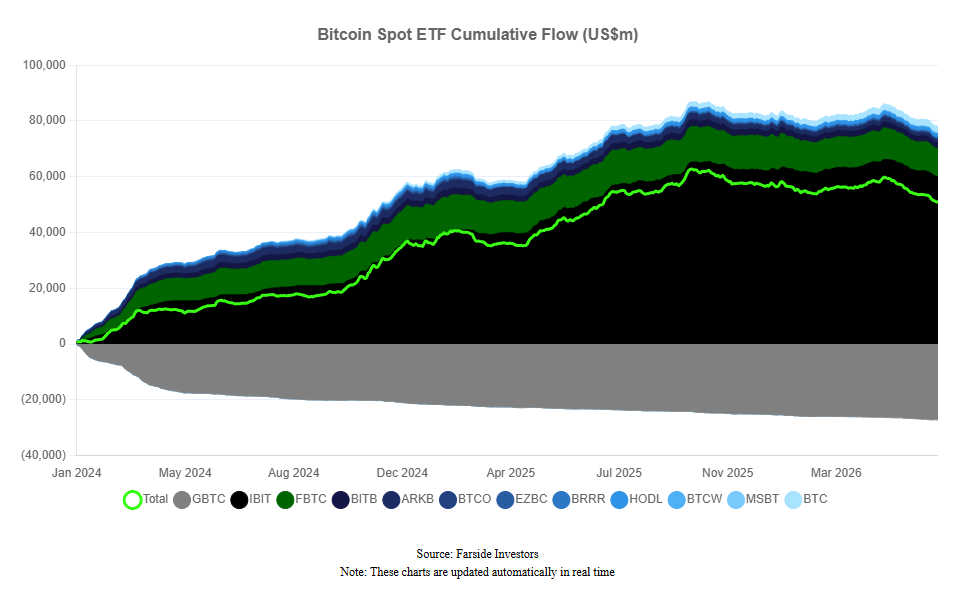
After strong inflows following their 2024 launch, ETF activity has become more uneven, with capital moving in and out depending on broader macro conditions.
This shift is changing how Bitcoin is priced in the short term.
ETF products now sit directly between traditional capital markets and spot Bitcoin exposure, making them a key channel for marginal demand.
When flows are positive, they add incremental support to price. When they turn negative, that support fades quickly.
As a result, Bitcoin is becoming more sensitive to liquidity conditions across traditional financial markets, including equities and interest rates.
Some market participants now view ETF flows less as a demand indicator and more as a liquidity signal.
Outflows do not necessarily imply weakening long-term interest in Bitcoin. In many cases, they reflect broader portfolio adjustments during periods of macro uncertainty.
The key question going forward is not whether flows are positive or negative on any given day, but whether they stabilize over time.
If volatility in ETF flows persists, Bitcoin’s price action is likely to remain closely tied to macro liquidity conditions. If flows normalize, ETFs may once again act as a more predictable source of structural demand.