Bitcoin Miners Are Becoming Power Assets,Home Mining Still Tells a Different Story
Bitcoin mining used to be judged mainly by hashrate.
More machines. More power. More blocks. More scale.
That story is changing.
According to TechRadar, AiOnX, through its parent company SWI Group, has taken a 77% stake in Genesis Digital Assets in a transaction valued at about $500 million. The reported deal gives AiOnX control over 15 crypto mining data centers across North Carolina, South Carolina, Texas and Sweden, along with access to roughly 1.3 gigawatts of available power.
The headline sounds like another crypto mining acquisition.
It is not.
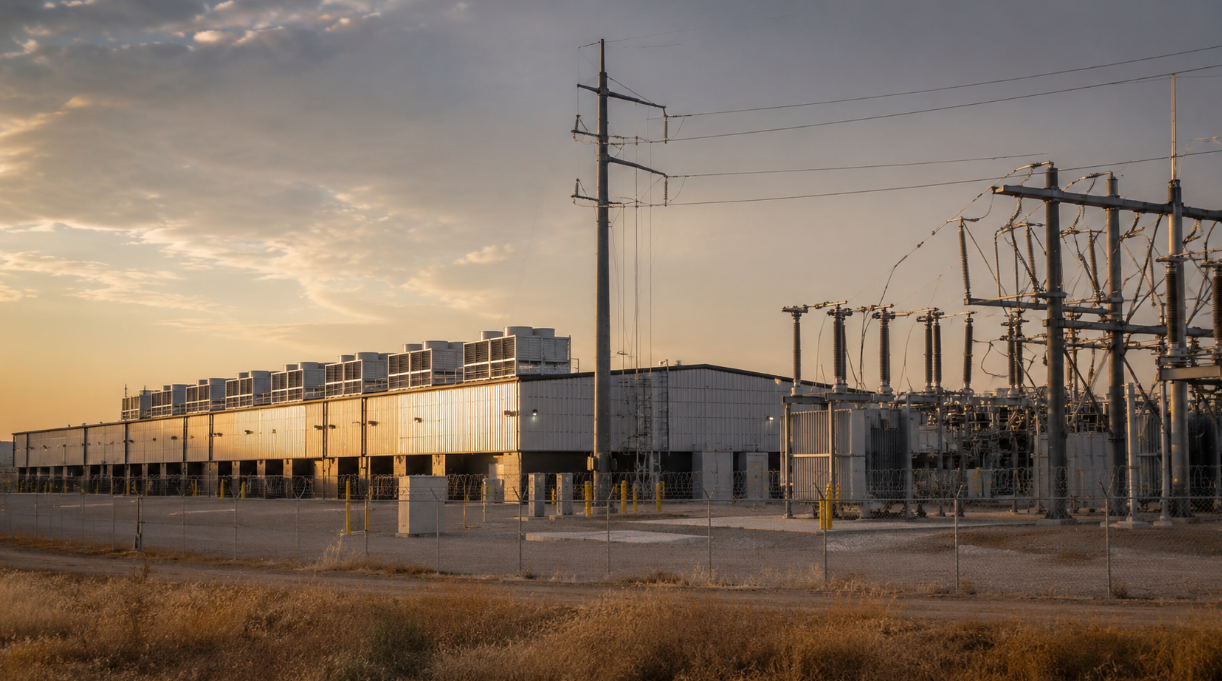
The more important story is that Bitcoin mining sites are being valued less like mining businesses and more like power-connected infrastructure. In the AI data center race, a site with land, grid access, cooling capacity, transformers, operational history and long-term power connectivity can be more valuable than the mining machines inside it.
That is the part worth watching.
The deal is bigger than mining
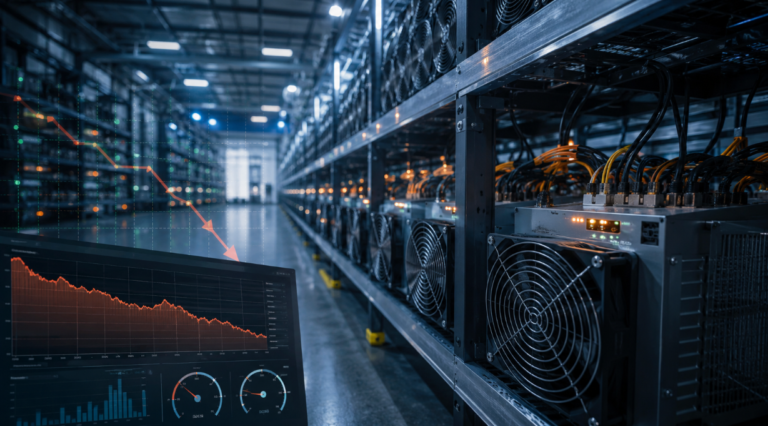
A Bitcoin mining facility is not just a warehouse full of ASICs.
At industrial scale, it is a power asset. It is a grid connection. It is an energy contract. It is land, cooling, electrical equipment, permits, network connectivity and operating staff. Those things take years to secure, especially in regions where data center developers are competing for the same power supply.
That is why a mining site can become attractive to an AI infrastructure company.
TechRadar reported that the AiOnX / SWI Group move was tied closely to GDA’s access to available power. The same report also noted that modern crypto ASICs cannot simply be turned into AI hardware, but the power and infrastructure around those machines can be far more useful to AI and high-performance computing workloads.
That distinction matters.
AI companies are not buying Bitcoin miners because an ASIC can suddenly train a model. They are looking at mining sites because the hardest part of the AI buildout is no longer only chips. It is power.
Power is now the scarce asset
The AI boom has turned electricity into one of the most important assets in digital infrastructure.
Reuters recently reported that U.S. data center electricity demand is expected to rise from 31 GW in 2025 to 66 GW in 2027, citing Goldman Sachs research. The same report said digital infrastructure investors are increasingly targeting power developers because data center companies need faster access to reliable electricity and grid connections.
This is the environment Bitcoin miners are now operating in.
For years, large miners searched for cheap electricity because mining economics demanded it. The whole business model depended on turning energy into hashes as efficiently as possible. Cheap power was a survival tool.
Now that same power access has become attractive to AI companies.
The result is a strange shift: some mining sites may be worth more as future AI data centers than as pure Bitcoin mining operations.
That does not mean Bitcoin mining is dead. It means the capital market is starting to look at mining infrastructure through a different lens.
ASICs do not become GPUs
There is one common misunderstanding around this trend.
A Bitcoin ASIC cannot be repurposed into an AI accelerator.
A Bitmain Antminer, a WhatsMiner, or a BM1370-based open-source miner is built for SHA-256 hashing. It is not a general-purpose GPU. It cannot be reconfigured into an Nvidia H100 cluster.
But the building around the ASICs can change use.
The racks can be removed. The electrical infrastructure can be upgraded. Cooling systems can be redesigned. Network and security systems can be rebuilt. A facility that once hosted Bitcoin miners can become a candidate for AI, cloud or high-performance computing deployment if the power and site conditions are strong enough.
That is the real story behind the AiOnX / GDA report.
The machines are not the prize.
The power is.
Industrial mining is drifting toward infrastructure finance
Bitcoin mining has always been capital intensive. But the largest players are becoming harder to describe as “miners” in the old sense.
They are energy operators. Data center developers. Grid participants. Infrastructure owners. In some cases, they are becoming landlords for compute.
When Bitcoin prices are strong, industrial mining can look simple from the outside: buy machines, plug them in, harvest BTC.
In reality, the business is much more fragile. Difficulty rises. Machines age. Electricity prices move. Debt has to be serviced. Power contracts matter. Uptime matters. Hashprice matters.
AI changes the comparison.
An AI or HPC customer may offer long-term revenue visibility. Bitcoin mining revenue is more exposed to BTC price, network difficulty, transaction fees, machine efficiency and power cost. That does not make one business “better” in every case, but it does explain why large infrastructure owners are willing to rethink how mining sites are used.
In the old mining cycle, the question was:
How much Bitcoin can this site produce?
In the new infrastructure cycle, the question becomes:
How much power does this site control, and what else can that power support?
That is a major shift.
Home mining sits on another branch
This is where home mining tells a different story.
A home miner is not trying to compete with a 1.3 GW industrial facility. It is not trying to win a power auction against hyperscalers. It is not trying to sign institutional AI contracts or convert a warehouse into a GPU campus.
That is not the point.
Home mining is personal. It is visible. It is small enough to understand.
A low-power miner on a desk does not represent industrial dominance. It represents direct participation. It lets someone see Proof of Work happening in real time, inside their own home, without needing a warehouse, a power contract or a corporate balance sheet.
That matters because Bitcoin mining has become harder for ordinary people to see.
At the industrial level, mining is increasingly hidden behind private facilities, energy agreements, hosting contracts, corporate finance and now AI infrastructure deals. The network keeps running, but the physical process becomes distant.
Home mining brings that process back into view.
You can hear the fan. You can see the hashrate. You can check the pool. You can understand that Bitcoin is not produced by a dashboard, an exchange balance or an ETF ticker.
It is produced by work.
Small miners do not need the same story
The mistake is to judge home mining by industrial mining standards.
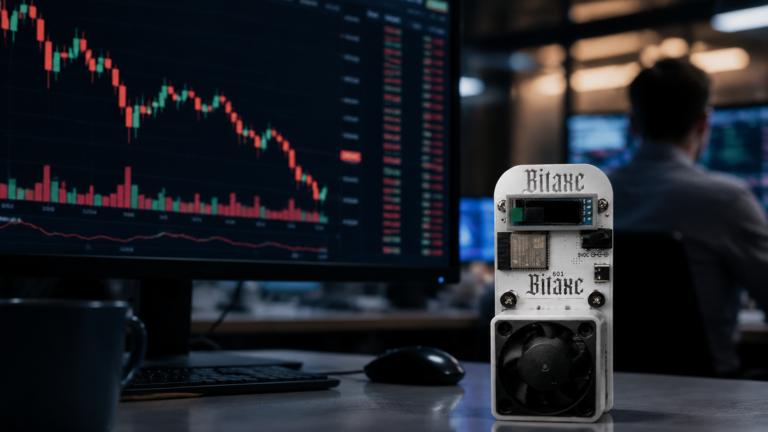
A Bitaxe-style miner is not a substitute for a large-scale facility. It is not designed to beat public mining companies on cost per kilowatt-hour. It is not a promise of steady income.
Solo mining is probabilistic. Mining economics depend on Bitcoin price, network difficulty, electricity cost, hardware efficiency and setup.
But that does not make small mining meaningless.
In fact, the more industrial mining becomes tied to AI infrastructure, power markets and institutional finance, the more important it becomes to keep Bitcoin mining understandable at the personal level.
A small miner teaches something that a stock chart cannot.
It shows that Bitcoin security is physical. It uses energy. It uses silicon. It requires machines to perform real computation. It is not abstract finance.
That is the part many people miss.
Proof of Work still needs to be visible
The AiOnX / GDA report is not just a story about one acquisition.
It is a signal.
Power-connected mining sites are becoming part of a much larger race for digital infrastructure. AI companies want power. Data centers want speed. Investors want assets that can support long-term compute demand.
Bitcoin miners happen to own something the AI world badly needs: energized sites.
That may push more industrial miners toward AI and HPC over time. Some will continue mining. Some will diversify. Some may sell. Some may become data center platforms with Bitcoin mining as only one part of the business.
But Bitcoin mining itself is bigger than the industrial version of the industry.
It still belongs to the network.
It still belongs to people who want to understand it.
And in a world where mining sites are being repriced as power assets, home mining keeps a different idea alive:
Proof of Work should not only exist behind fences, substations and corporate infrastructure deals.
It should still be something people can run, see and understand for themselves.