
Is Home Mining Making a Comeback? Another Signal Behind Bitcoin’s Long-Term Bull Market
Asset management giant VanEck has once again expressed strong confidence in Bitcoin’s long-term future. Matthew Sigel, Head of Digital Assets Research at VanEck, recently stated that a $1 million Bitcoin within the next five years still represents their “base case” scenario. In his view, Bitcoin is no longer just a cyclical speculative asset — it’s gradually evolving into a global long-term trend.
Sigel compared Bitcoin’s growth to the rise of the video game industry. In the early days, many people viewed gaming as a niche form of entertainment. Over time, however, it became a mainstream global industry. Bitcoin, it seems, may be following a similar path.
Of course, that doesn’t mean Bitcoin will move straight up from here. Volatility will remain, and market cycles aren’t going away anytime soon. But over the long run, institutional capital, spot ETFs, corporate treasury adoption, and shifting global monetary conditions are slowly reshaping Bitcoin’s market structure.
One thing worth paying attention to is that despite the recent market recovery, derivatives markets still haven’t shown the kind of extreme euphoria typically seen near cycle tops. According to Sigel, that could suggest this cycle hasn’t truly entered its most speculative phase yet.
For years, the idea of Bitcoin reaching $1 million sounded more like a slogan used by extreme bulls. Today, though, more traditional financial institutions are starting to take that possibility seriously.
A major reason for that shift is the continued accumulation happening through Bitcoin ETFs.
Over the past few months, U.S. spot Bitcoin ETFs have seen strong inflows again. Products from firms like BlackRock and Fidelity continue absorbing BTC from the market, and most of the investors behind these funds are not short-term traders.
Compared to previous cycles that were largely retail-driven, more capital entering Bitcoin today is coming from pension funds, family offices, long-term asset managers, and corporate reserves. These types of investors are generally focused on long-term holding rather than active trading, which changes the market dynamic significantly.
At the same time, Bitcoin’s new supply continues to shrink.
Following the 2024 halving, the amount of BTC mined each day dropped even further, while ETFs, institutions, and corporations continue buying aggressively. To some extent, the market is entering a phase where long-term demand is rising while new supply becomes increasingly limited.
Blockstream CEO Adam Back recently pointed out that as Bitcoin prices rise, miners may actually reduce selling pressure because they no longer need to sell as much BTC to sustain operations.
For large institutions, Bitcoin increasingly behaves like a macro asset. But for many home bitcoin mining enthusiasts, the story feels a bit more personal.
Over the past several years, industrial-scale mining farms gradually came to dominate global hashrate, leading many people to believe home mining was effectively dead. Yet over the last couple of years, low-power, compact, and open-source bitcoin miner hardware has started gaining attention again.
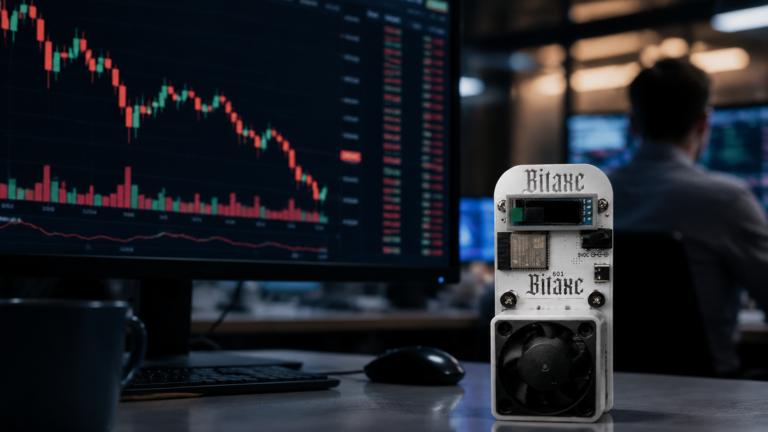
Projects like Bitaxe, NerdMiner, and other open-source ASIC initiatives are attracting more individuals back into the world of home mining.
Interestingly enough, the popularity of these devices seems to reflect a broader return to Bitcoin’s original culture. Many people running home bitcoin mining setups today aren’t necessarily chasing profitability alone. In many cases, they’re doing it to better understand Bitcoin, participate directly in the network, support decentralization, and experience Proof-of-Work firsthand.
There are now plenty of users running a small Bitaxe miner right next to their desk 24/7. Realistically, the odds of finding a block with a device like that are incredibly small. But that’s not really the point for many of them.
What matters is the feeling of actively participating in the Bitcoin network itself.
And if Bitcoin eventually moves into significantly higher price territory, smaller solo mining devices could become even more attractive. After all, the idea that every 10 minutes there’s another block reward waiting somewhere still captures people’s imagination — and that sense of participation remains one of the most important parts of Bitcoin culture.