If Bitcoin Goes to $750K, Buying It Isn’t Enough
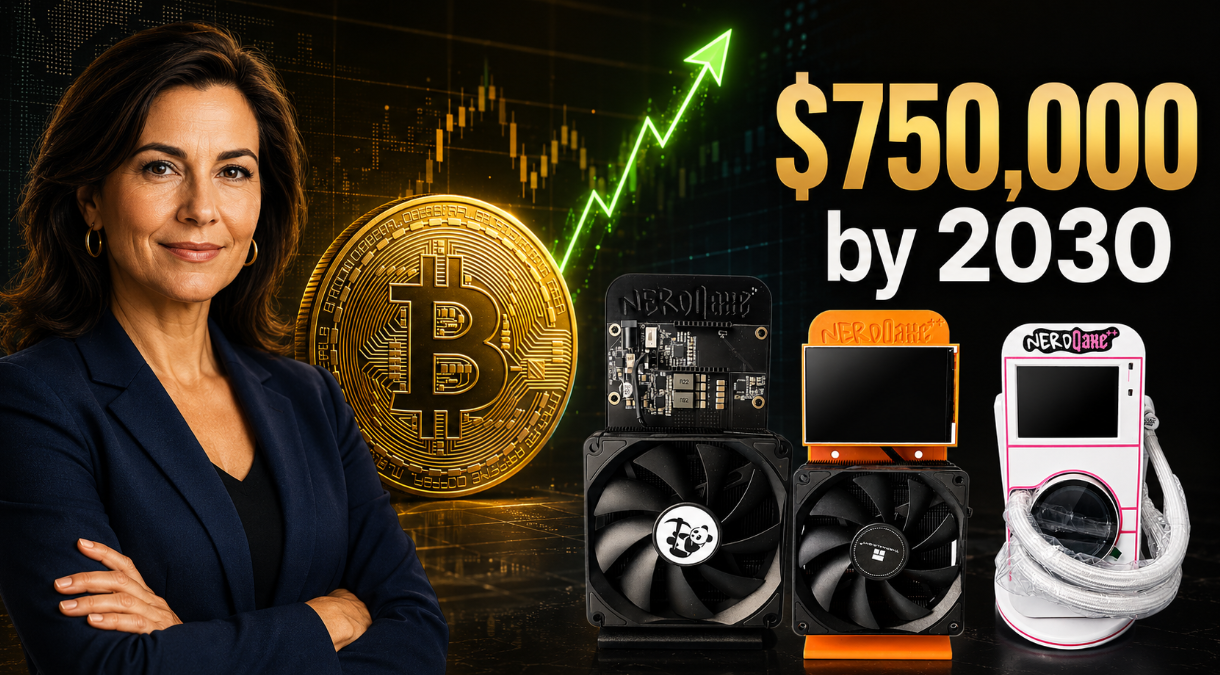
Cathie Wood is back in the headlines with another bold Bitcoin forecast. According to the original report, ARK Invest’s base case puts Bitcoin around $750,000 by 2030, with a more aggressive bull case tied to Bitcoin taking market share from gold. The argument is familiar: younger generations are more comfortable with digital assets, institutional adoption still has room to grow, and Bitcoin’s fixed supply keeps making it harder for traditional investors to ignore.
Maybe that forecast plays out. Maybe it does not.
Nobody knows where Bitcoin will trade in 2030, and anyone pretending otherwise is selling certainty they do not have. But the more interesting question is not whether Bitcoin hits a specific price target.
The better question is this: if Bitcoin really becomes a major store of value for the next generation, should ordinary people only interact with it as a number on an exchange screen?
That feels too shallow.
If Bitcoin is going to matter that much, people should understand more than the chart. They should understand the network. They should understand custody, fees, blocks, miners, difficulty, energy, and the strange but powerful idea that money can be secured by work instead of promises.
That is where Bitcoin mining belongs in the conversation.
Price Targets Get Attention, but They Can Teach the Wrong Lesson
Big Bitcoin forecasts are good at one thing: creating attention.
They make headlines. They pull new people into the discussion. They force traditional investors to ask whether Bitcoin deserves a place beside gold, stocks, bonds, and cash.
But price targets also create a bad habit.
They train people to treat Bitcoin like a speculative ticker first and a monetary network second. That is especially risky for beginners. If the only question is “How high can it go?” then Bitcoin becomes just another asset in a brokerage account.
That misses the point.
Bitcoin is not only an asset. It is a working system. It has rules. It has a supply schedule. It has miners competing to produce blocks. It has nodes checking those blocks. It has users who can hold their own keys. It has a monetary policy that is not adjusted by a committee.
You do not need to become a protocol engineer to appreciate that. But if Bitcoin is supposed to be more than a trade, then some basic mechanical understanding matters.
A generation inheriting wealth and allocating part of it to Bitcoin should not only know how to buy exposure. They should know what they are getting exposure to.
The Next Generation Should Not Learn Bitcoin Only Through Apps
One of the main ideas behind the long-term Bitcoin thesis is generational change. Younger investors are more likely to understand digital scarcity. They are more comfortable with digital assets, digital wallets, online communities, and internet-native money.
That part makes sense.
But there is a problem: most digital experiences today are highly abstracted. Tap a button. Swipe a chart. Watch a balance move. Everything becomes clean, fast, and platform-controlled.
Bitcoin should not feel like just another app balance.
If someone only experiences Bitcoin through an exchange app, they may understand the price but not the system. They may know when Bitcoin is up or down, but not what a block is. They may hear the phrase Proof of Work without ever connecting it to machines, energy, competition, and verification.
That gap matters.
A person who understands Bitcoin only as an account balance is easier to push around by headlines and narratives. A person who has used self-custody, paid an on-chain fee, run a node, or experimented with a small Bitcoin miner has a different relationship with the network.
They have touched the system directly.
That does not make them an expert. It simply makes the learning more real.
Bitcoin Mining Makes the Network Physical
Bitcoin can feel abstract until you look at mining.
A Bitcoin miner is not a metaphor. It is a machine that consumes power, produces heat, runs firmware, connects to a pool or solo mining setup, and contributes hashrate to the network.
It makes the invisible visible.
This is why Bitcoin home mining has a different kind of educational value. When someone sets up a small miner at home, they quickly learn that mining is not magic. Power stability matters. Cooling matters. Firmware matters. Network connection matters. Mining difficulty matters. Luck matters too, especially in solo mining.
That experience changes how people think about Bitcoin.
Mining stops being some vague industrial activity happening far away. It becomes the process that secures the chain, orders transactions, and issues new coins according to rules that nobody can casually rewrite.
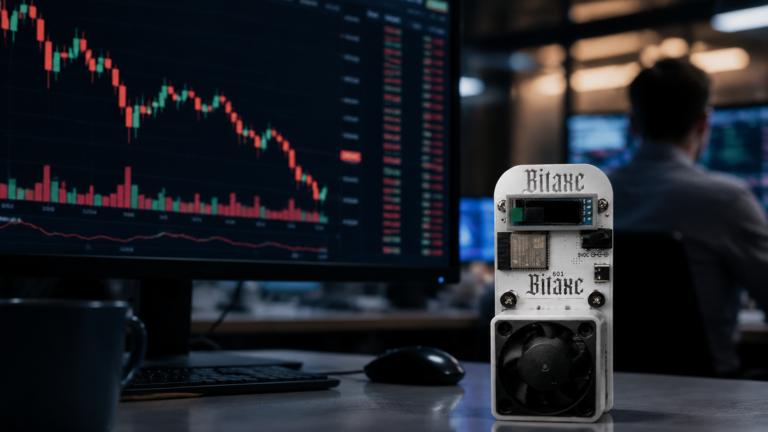
A small Bitaxe miner on a desk will not compete with a large industrial mining farm. That is not the point. The point is that a small open-source Bitcoin miner can turn Bitcoin from a price chart into a working system that someone can observe directly.
For many users, that is more useful than another price prediction.
Home Mining Is Not Trying to Beat Industrial Farms
Every time home Bitcoin mining comes up, someone makes the obvious objection: small miners cannot compete with large mining operations.
That is true in the narrow economic sense. Industrial miners have scale, cheaper power, optimized facilities, professional maintenance, and serious capital. A home setup is not going to outperform that kind of operation on efficiency.
But that objection misses the category.
Home Bitcoin mining is not always trying to be a miniature version of an industrial mining business. Sometimes it is education. Sometimes it is hobbyist participation. Sometimes it is a solo mining experiment. Sometimes it is simply a way to understand Bitcoin without relying only on commentators, influencers, or exchange dashboards.
That does not mean people should ignore costs. Electricity matters. Noise matters. Heat matters. Hardware quality matters. A small miner still has to be treated as real Bitcoin mining hardware, not a toy.
But dismissing home mining because it is not industrial-scale is like dismissing a home server because it is not a cloud data center.
The use case is different.
The value is direct contact with the system.
The Hardware Layer Deserves More Respect
Most Bitcoin conversations happen at the asset layer.
Price. ETF flows. Institutional adoption. Macro conditions. Gold comparisons. Portfolio allocation.
Those topics are not useless. They are part of the story. But Bitcoin survives because the hardware layer keeps working.
Mining machines hash. Power systems feed them. Fans cool them. Pools coordinate them. Firmware controls them. Operators repair them. Nodes verify the results. Blocks keep coming.
That is not as clean as a price chart, but it is more honest.
This is where small miners and open-source hardware deserve more attention. A device like a Bitaxe miner gives ordinary users a smaller entry point into the mining side of Bitcoin. It does not turn every person into a professional miner. It does make the network less abstract.
SoloBitaxe fits into that broader Bitcoin home mining trend as one example of how small mining hardware is being tested, packaged, and made more approachable for everyday users. The larger point is not one brand. The point is that the learning curve around mining is getting lower.
That matters if Bitcoin is going to be held by more people who did not grow up reading mining forums.
If Bitcoin Becomes a Store of Value, Participation Should Get Deeper
Cathie Wood’s forecast is ultimately about adoption. More institutions. More younger investors. More recognition of Bitcoin as a digital store of value.
Maybe that happens at the scale ARK expects. Maybe it does not.
But if the direction is even partly right, Bitcoin education needs to improve.
Not marketing education. Not “number go up” education. Real education.
People should understand why fixed supply matters. They should understand why self-custody is different from exchange custody. They should understand what miners do. They should understand why difficulty adjusts. They should understand that Bitcoin’s security is not based on corporate trust, but on open verification and economic cost.
Bitcoin mining is one of the clearest ways to make that lesson tangible.
A person can read about Proof of Work for years and still not feel it. Then they plug in a small miner, hear the fan, see the hashrate, watch the pool dashboard, and suddenly the concept is no longer abstract.
That is not financial advice. It is a practical observation from the hardware side of Bitcoin.
If Bitcoin becomes a major wealth asset for the next generation, the worst outcome would be millions of people holding it without understanding why it works.
Buying Bitcoin gives someone exposure to the asset. Understanding mining gives them exposure to the system behind it.