
Bitcoin’s $1 Million Debate Misses the Mining Question
Anthony Pompliano’s latest Bitcoin argument is easy to turn into a headline: Bitcoin could reach $1 million if the U.S. government keeps expanding the money supply.
That is the part everyone shares. It is clean, loud, and perfect for social media. A big number always travels faster than a complicated idea.
But the more interesting part is not the number. It is the reason behind it.
According to the original report, Pompliano’s view is built around a familiar but powerful argument: if governments continue to print money, hard assets benefit. Bitcoin, in that frame, is not just another speculative technology trade. It is a scarce monetary asset being repriced against currencies that keep losing purchasing power.
That does not mean Bitcoin has to move in a straight line. It does not mean any specific price target is guaranteed. And it certainly does not mean everyone should treat a million-dollar prediction as a trading plan.
The more useful question is this: if Bitcoin is increasingly understood as a hard asset, why do so many people still talk about it only as a price chart?
The price target is loud. The mechanism is quieter.
A $1 million Bitcoin prediction works because it compresses a huge macro argument into one number.
Money supply expansion. Government debt. Currency debasement. Institutional allocation. Gold comparisons. The decline of fiat purchasing power. All of that gets boiled down into a single price target.
That is useful for attention, but it also creates a problem. It encourages people to treat Bitcoin as something that simply “goes up” because famous investors say so.
That is not how Bitcoin works.
Bitcoin does not become more credible because someone makes a bold prediction. It becomes credible because blocks keep getting mined, nodes keep validating, miners keep competing, and the issuance schedule keeps doing what it was designed to do.
The price is the visible layer. Proof of Work is the machine underneath it.
If Bitcoin is going to be treated seriously as a hard asset, then the conversation cannot stop at price. It has to include the physical and economic process that secures the network.
That process is mining.
Hard assets do not maintain themselves
Gold has a simple story. It is scarce, difficult to produce, and expensive to extract. That physical difficulty is part of why people have trusted it for thousands of years.
Bitcoin has a different kind of difficulty.
It is not dug out of the ground. It is produced through computation, electricity, hardware, and global competition. The mining process is what turns Bitcoin from a digital ledger into a monetary network with real-world cost behind it.
This is where many price-focused discussions become weak. People talk about Bitcoin as “digital gold,” but then ignore the machinery that gives the network its settlement security.
A Bitcoin miner is not just a box that tries to earn coins. It is part of a global security market. Every miner contributes hashrate. Every block reflects energy, silicon, firmware, cooling, power design, and operational discipline.
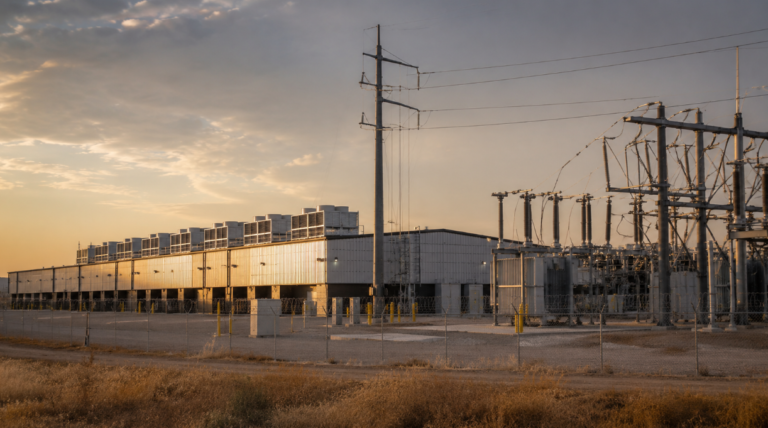
That does not mean every miner is equally important. Industrial mining farms dominate the hashrate. Large-scale operations have better power contracts, better infrastructure, and professional maintenance teams.
But dominance is not the same thing as total control.
Bitcoin’s strength comes from the fact that participation remains open. Anyone with the right hardware, power, and knowledge can point a machine at the network. That open access is not a marketing detail. It is part of the design.
Institutions can buy Bitcoin, but they cannot replace participation
One of the bigger shifts in Bitcoin over the last few years is that Wall Street has become much more involved.
That is not automatically bad. More institutional participation can bring liquidity, public awareness, and a different level of market legitimacy. It also changes the way Bitcoin trades. A larger asset is usually harder to move. The early days of violent retail-driven cycles may not repeat in exactly the same way.
But there is a difference between owning Bitcoin exposure and participating in the Bitcoin network.
Buying Bitcoin through a financial product is easy. Running a node, learning mining economics, configuring hardware, understanding power draw, and seeing Proof of Work operate in real time are very different experiences.
That gap matters.
If Bitcoin becomes only a ticker inside brokerage accounts, the average user becomes a spectator. They watch the price, repeat the macro narrative, and wait for the next prediction. They may believe in hard money, but they never touch the system that makes it work.
This is where Bitcoin home mining has a role, even if it is not the center of global hashrate.
Home Bitcoin mining gives ordinary users a practical way to understand what mining really is. A small Bitcoin miner on a desk will not compete with an industrial facility. That is not the point. The point is that it makes the network less abstract.
You see heat. You hear fans. You configure firmware. You watch shares. You learn why efficiency matters. You learn why cooling matters. You learn why mining is not magic.
For many people, that education is more valuable than another price prediction.
Mining is where Bitcoin stops being a slogan
The phrase “be your own bank” has been repeated so many times that it often sounds empty.
Mining cuts through that.
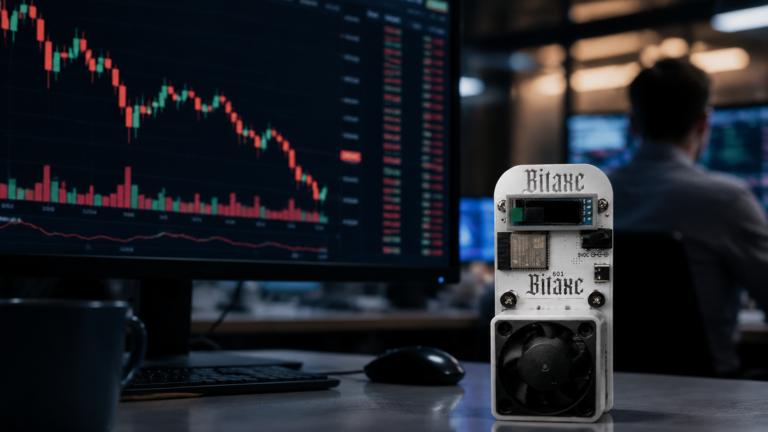
A Bitaxe miner, for example, does not turn someone into a large-scale mining operator. It does not promise steady rewards. In solo mining, the odds are extremely difficult and users should understand that clearly.
But it does something useful: it gives people direct contact with Bitcoin mining hardware. It lets them experiment with hashrate, firmware, power, heat, and pool configuration. It turns Bitcoin from an app balance into a working system.
That matters because Bitcoin has always had two audiences.
One audience wants exposure. They want to hold Bitcoin because they believe the monetary argument.
The other audience wants participation. They want to understand the network, run tools, test hardware, and reduce their dependence on platforms they do not control.
Both groups can exist. But they are not the same.
If Pompliano is right that Bitcoin benefits from continued money printing, then more people will probably enter through the first door. They will come for price, scarcity, and hard-asset protection.
Some of them should eventually find the second door.
That second door is where mining, nodes, wallets, self-custody, and technical literacy live.
Home mining will not outmuscle industrial mining. That is not the point.
A common mistake is to judge home mining by the wrong standard.
If the question is, “Can a home miner beat an industrial mining farm on cost per terahash?” the answer is usually no. Industrial miners have scale, power access, infrastructure, and operational advantages that a normal household cannot match.
But that is not the only question.
A home miner can teach the mechanics of Proof of Work. It can make mining visible. It can help a user understand why Bitcoin mining hardware has to balance efficiency, thermal design, reliability, and cost. It can show why a machine that looks simple from the outside is actually a collection of engineering tradeoffs.
That is why devices built around the Bitaxe idea matter to a certain kind of user. Not because they replace industrial miners, but because they keep the door open for hands-on participation.
That is also why the language around mining should be careful.
No serious person should tell beginners that solo mining is a reliable income strategy. No one should sell a small miner as a shortcut to guaranteed Bitcoin. That kind of messaging damages trust and attracts the wrong audience.
The better message is more honest: this is real hardware, connected to a real network, teaching a real process.
That is enough.
The better question after a $1 million prediction
Bitcoin price predictions are not going away. They are part of the culture now. Some are serious, some are promotional, and some are just designed to get attention.
Pompliano’s argument is worth discussing because it points to something bigger than a number. If governments keep expanding money supply and investors keep looking for scarce assets, Bitcoin will remain part of the hard-money conversation.
But a serious Bitcoin conversation should not end with “How high can it go?”
It should also ask: who understands how it works? Who can participate? Who controls the hardware? Who learns the process instead of only watching the chart?
If Bitcoin is just another asset to speculate on, then the price target is the whole story.
If Bitcoin is a monetary network, the mining question matters just as much.