A $300 Bitcoin Miner Won a Block. The Real Lesson Isn’t Profit.
A home Bitcoin miner just did the thing every solo miner dreams about and almost none should expect.
According to the original report, a solo miner found Bitcoin block 951771 using a consumer-grade Canaan Avalon Nano 3S. The reward was 3.1404 BTC, worth roughly $232,000 at the time. The reported odds were ridiculous: about one in 149 million for a small miner running around 6.68 TH/s.
It is a perfect Bitcoin story. A small machine. Brutal odds. A full block reward. One person at home touching the same network that industrial mining farms compete on every day.
It is also exactly the kind of story that gets misunderstood.
The easy version is: buy a cheap Bitcoin miner, plug it in at home, and maybe you hit a life-changing block. That version will get clicks. It will also mislead newcomers.
The better version is less flashy: solo mining is a lottery, not a business model. The odds are ugly. The reward is real. And the fact that a small machine can participate at all is the part that still matters.
The headline works because the math is brutal
A $300 machine finding a Bitcoin block sounds almost impossible because, in practical terms, it is.
Bitcoin mining is a race to find a valid block hash. Every miner is taking shots at the same target. More hashrate means more attempts. Industrial miners win more often because they bring massive hashrate, power infrastructure, cooling, uptime, and operational discipline to the table.
A small Bitcoin miner at home is playing the same game, just with a tiny number of tickets.
That does not make the ticket fake. It makes it honest. A valid hash does not care whether it came from a warehouse full of ASICs or a small device sitting on a desk. If the work meets the network target, it wins.
That is the cold beauty of Proof of Work.
But the math does not become friendly because one miner got lucky. A rare win deserves attention. It should not be turned into a sales script.
Solo mining is probability, not income
People new to home Bitcoin mining often misunderstand what solo mining actually means.
With pooled mining, miners combine hashrate and share rewards based on contribution. The payouts are smaller, but they are more regular. With solo mining, the miner is trying to find an entire block independently, or through a solo pool setup. If the miner finds a valid block, the reward can be large. If not, there may be nothing at all.
That is why people call it Lottery Mining.
The phrase is not just a meme. It describes the risk profile pretty well. You can run real Bitcoin mining hardware. You can configure it correctly. You can point it to a solo pool. You can keep it online for months. For a small miner, the expected result is still usually zero.
That sounds harsh because it is.
But harsh does not mean pointless. A lot of Bitcoin culture lives in the gap between financial return and direct participation. Running a node usually does not pay you. Holding your own keys does not generate yield. Learning how mining works does not guarantee a reward.
Still, those things matter because they turn a person from a spectator into someone who actually touches the system.
Solo mining belongs in that category when people are honest about it.
The real story is access, not the jackpot
The most interesting part of this block win is not that someone made around $232,000. That number is why the story spreads, but it is not the deeper point.
The point is that a small home miner could still connect to Bitcoin and compete under the same rules as everyone else.
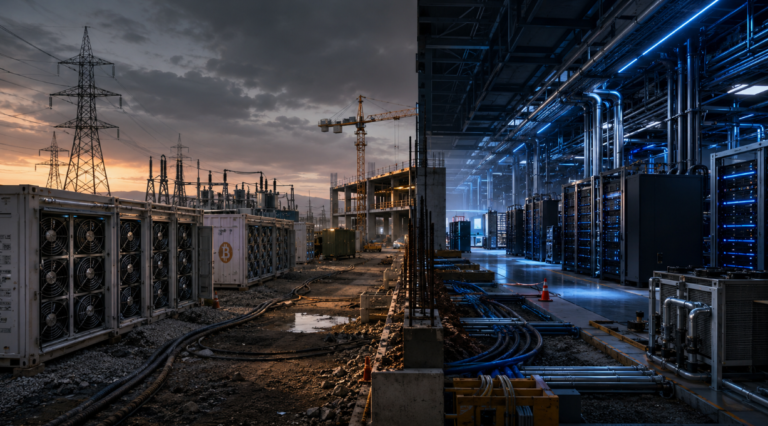
That matters because Bitcoin mining has become heavily industrialized. Large miners have better power contracts, better facilities, better cooling, better financing, and more professional operations. That is not automatically bad. Scale is part of how the network is secured today.
But if Bitcoin mining becomes something ordinary users only watch from the outside, something gets lost.
Bitcoin home mining keeps a small door open. Not a door to easy money. A door to direct participation.
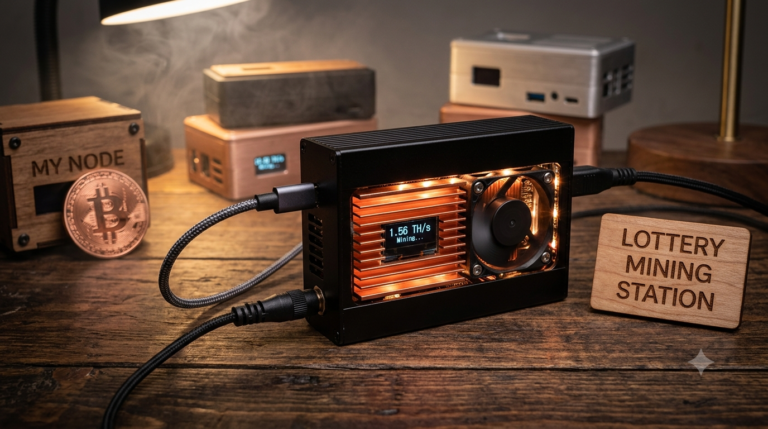
A person running a home Bitcoin mining setup is not replacing a large mining farm. A Bitaxe miner on a desk is not competing with an industrial site in any economic sense. But it is still doing real work. It is hashing. It is consuming power. It is submitting shares. It is teaching the same rules.
That is a different kind of value than yield.
Small miners make Bitcoin mining physical again
There is another reason small miners matter: they make Bitcoin mining less abstract.
Most people talk about hashrate like it is just a number on a dashboard. TH/s, EH/s, network difficulty, block rewards, transaction fees. These words are easy to repeat and easy to misunderstand.
A small miner makes the process physical.
You hear the fan. You think about airflow. You notice heat. You learn what a power supply does. You configure pool settings. You deal with WiFi. You watch accepted shares. You start to understand why pooled mining and solo mining are completely different experiences.
The device forces you to learn.
That is where home mining becomes useful even when it is not financially rational. For people who care about Bitcoin as a working system, not just a traded asset, a small Bitcoin miner turns Proof of Work from an idea into something sitting on a table.
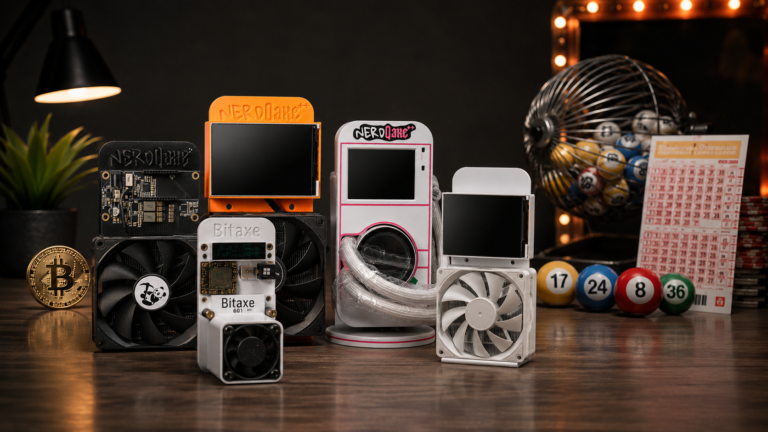
That is also why the Bitaxe miner community is interesting. The devices are small, but the learning curve is real. SoloBitaxe and other home mining hardware projects sit in this corner of the market: not pretending small devices will beat industrial miners, but making it easier for people to understand the process directly.
The industry should stop selling the jackpot version
There is a lazy way to talk about this story:
“Someone won $232,000 with a $300 miner. You could be next.”
That line will get attention. It might even sell hardware. It is also the worst possible framing for the industry.
Bitcoin mining already has enough confusion around profitability, power cost, difficulty, heat, noise, and hardware lifespan. Turning a rare solo block into a promise makes the space look unserious.
The better framing is simple: solo mining is lottery mining. The chance of success is extremely low. The process is real. The reward, if it happens, is real. But nobody should treat it as predictable income.
That message is less exciting, but it builds more trust.
The home mining audience is not stupid. Many people know exactly what they are doing. They like the odds because the odds are part of the game. They like the machine because it connects them to Bitcoin in a direct way. They are not asking for a fake business plan. They are asking for honest hardware, clear expectations, and practical guidance.
This is where Bitcoin mining hardware brands need discipline. The market does not need more hype. It needs better explanations.
A small machine can still make a serious point
Block 951771 will probably be remembered online as another “small miner hits the jackpot” story.
That is fine. Bitcoin has always had room for strange stories. Someone runs a small machine at home, points it at a solo pool, and somehow finds a block before the rest of the world. It is rare, weird, and very Bitcoin.
But the better takeaway is not that everyone should chase the same outcome.
The takeaway is that Bitcoin still allows open participation. The network does not ask whether your miner is in a data center or on a shelf. It does not ask whether you are a corporation or a hobbyist. It only asks whether your work is valid.
That does not make solo mining easy. It does not make it profitable. It does not make the odds feel fair.
It makes the system honest.
For home miners, that may be the real attraction. Not the fantasy of easy rewards, but the ability to run a machine, connect to the network, and take part in Proof of Work directly.
The jackpot gets the headline. The machine doing real work is the part worth remembering.
FAQ
Is solo mining a reliable way to earn Bitcoin?
No. Solo mining is not a reliable income strategy for small miners. It is closer to lottery mining: the reward can be large, but the probability of finding a block is extremely low.
What is Lottery Mining?
Lottery Mining means solo mining with very small odds of finding a Bitcoin block. The miner is doing real Proof of Work, but the result is unpredictable and should not be treated as steady income.
Why do people still run small Bitcoin miners at home?
Many home miners run small devices to learn how Bitcoin mining works, test hardware, connect to solo pools, experiment with nodes, and participate directly in Proof of Work.
Can a small Bitcoin miner really find a block?
Technically, yes. Any valid Bitcoin miner can find a block if it produces a hash that meets the network target. Practically, the odds for a small miner are extremely low.
Is a Bitaxe miner suitable for home Bitcoin mining?
A Bitaxe miner is commonly used by home mining enthusiasts who want a small, low-power device for learning, experimentation, and solo mining. It should not be treated as a predictable profit machine.