Bitcoin Mining Is Becoming a Balance Sheet Game
Coolbit Technologies’ planned U.S. IPO is not huge by Wall Street standards. According to its F-1 filing, the Bitcoin miner plans to offer 3.75 million Class A ordinary shares, while a selling shareholder plans to offer another 1.25 million shares, with an expected price range of $4 to $5 per share. Renaissance Capital reported that the deal could raise up to $23 million and value the company at about $135 million at the midpoint of the range.
That is not the part that caught my attention.
The interesting part is what the filing says about the shape of modern Bitcoin mining. Coolbit describes a model built around leased high-performance Bitmain miners, third-party hosting providers, operations in the U.S. and Canada, and a possible move toward buying Bitcoin miners directly or acquiring its own mining facility. This is not a guy buying a Bitcoin miner, plugging it in, and watching the dashboard. This is capital planning, facility strategy, power procurement, hardware sourcing, pool selection, and balance sheet management.
That is where Bitcoin mining has been heading for years. Coolbit just gives us another clean example.
The miner is no longer the whole business
A lot of people still talk about Bitcoin mining as if the main question is, “Which machine should I buy?”
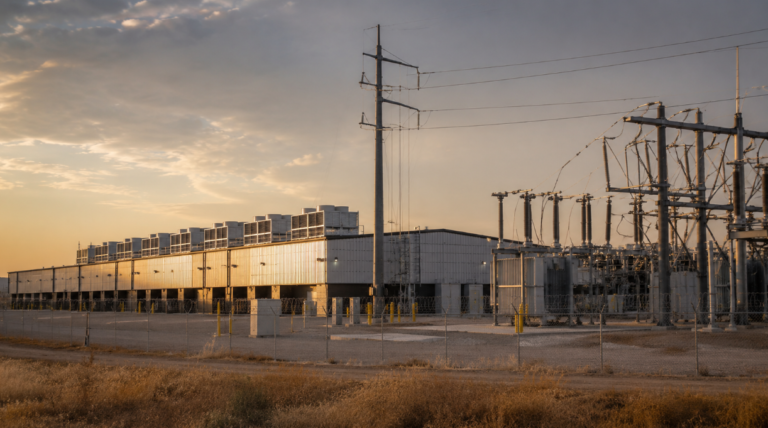
That question matters, but it is not enough anymore. At industrial scale, the machine is only one line item inside a much larger operating system. The real game is access to cheap and reliable electricity, the ability to deploy hardware fast, relationships with hosting operators, uptime management, repair logistics, treasury decisions, and financing.
A public mining company is not just trying to mine Bitcoin. It is trying to manage volatility. It has to decide when to hold Bitcoin, when to sell Bitcoin, when to expand capacity, when to delay purchases, when to refinance, and when to bring infrastructure in-house.
That is a very different business from the old retail fantasy of “buy a box, print coins.”
The filing makes this clear without trying to be dramatic. Coolbit’s stated use of proceeds includes buying mining equipment, upgrading hashrate, funding working capital, and supporting expansion into hosted or proprietary mining facilities. That is the language of an infrastructure business, not a hobbyist hardware purchase.
Public markets change the incentives
When a Bitcoin mining company goes public, the audience changes.
A private miner can think mainly in terms of uptime, energy cost, Bitcoin price, and operational survival. A public miner also has to explain itself to investors, lawyers, auditors, underwriters, and regulators. It has to turn messy mining operations into a story the market can price.
That pressure can be useful. Public filings force companies to describe their risks, costs, dependencies, and business models in a way that casual crypto marketing usually avoids. They also reveal how much of mining is dependent on things that are not visible in a hashrate screenshot.
But public markets also pull miners toward scale. Bigger fleet. More power. More predictable contracts. More reporting. More growth narrative. More pressure to justify valuation. Once a company is being measured by market cap, revenue growth, deployed hashrate, and expansion plans, it is not playing the same game as a home miner running a compact device on a desk.
That does not make public mining bad. It just means the industry has split into very different layers.
Bitcoin mining is becoming a capital stack
The more mature Bitcoin mining gets, the less it looks like a simple hardware business.
It starts to look like a capital stack.
There is equipment financing or leasing. There are hosting contracts. There are power agreements. There are facility buildouts. There are maintenance obligations. There are custody decisions for mined Bitcoin. There are mining pool relationships. There is treasury management. There are public-market expectations layered on top of a commodity-like business that still depends heavily on Bitcoin price and network difficulty.
That is why the phrase “Bitcoin mining hardware” can be misleading if used too casually. Hardware is the visible part. The harder part is the system wrapped around the hardware.
This is also why small miners often misunderstand large miners, and large miners often underestimate small miners. They are not solving the same problem.
Large operators are trying to optimize megawatts, capex, financing, and operational scale. Home mining is solving a different problem: how to keep Bitcoin mining understandable, physical, and personally reachable when the industrial side becomes increasingly abstract.
Home mining is not pretending to beat mega farms
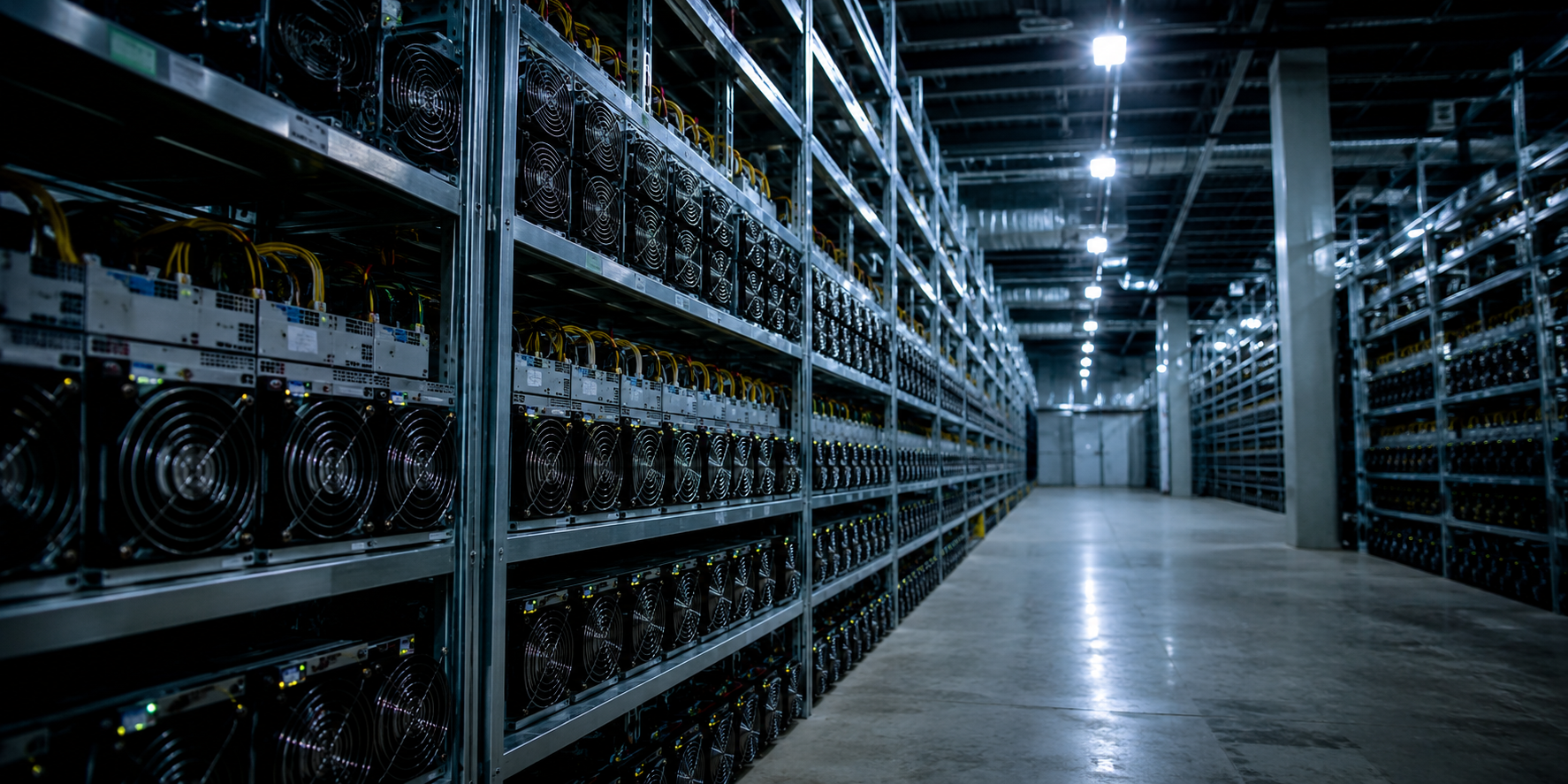
Nobody serious should claim that a home Bitcoin mining setup is going to compete with a public mining company on total hashrate, power pricing, or fleet efficiency. That is not the point.
Bitcoin home mining matters because it keeps the act of mining from disappearing into remote facilities, investor decks, and outsourced infrastructure. It lets ordinary Bitcoiners see what mining actually is: heat, noise, watts, hashrate, firmware, pools, luck, uptime, failures, tuning, and patience.
That experience changes how people talk about Bitcoin.
Someone who has run a Bitcoin miner at home understands the network differently from someone who only watches price charts. They understand that mining is not magic. They understand that electricity is not a footnote. They understand that efficiency is not a slogan. They understand that solo mining is probabilistic, not a lottery ticket that owes you a win.
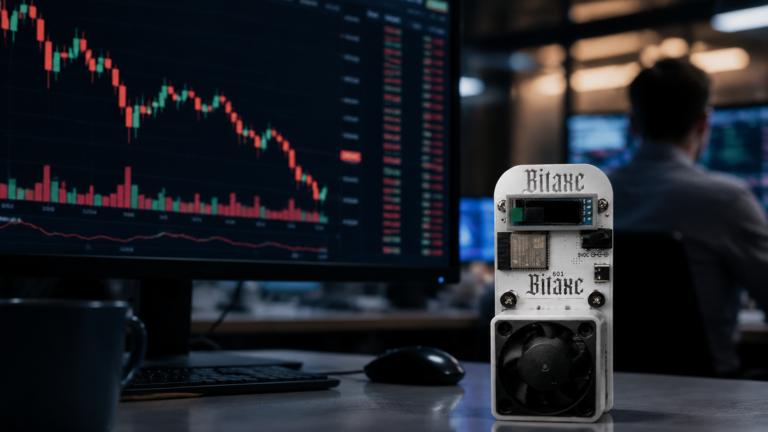
A Bitaxe miner or other small open-style home mining device will not make a living room look like an industrial farm. It is not supposed to. The value is that it makes mining visible again. SoloBitaxe fits into that same category: small-scale Bitcoin mining hardware for people who want to participate, learn, experiment, and keep a direct connection to the process.
That is a different market from institutional mining, but it is not an irrelevant one.
Accessibility is a real mining issue
There is a quiet risk in the industrialization of mining: the average Bitcoiner starts to see mining as something “other people” do.
The farms handle it. The public companies handle it. The hosting providers handle it. The pool dashboards handle it. The infrastructure layer becomes distant.
That distance matters.
Bitcoin does not need everyone to mine at home. That would be unrealistic. But it does need mining to remain legible. People should be able to understand what a Bitcoin miner does, how hashrate connects to the network, why power matters, why difficulty adjusts, and why mining is not the same as buying a token on an exchange.
Home Bitcoin mining helps with that. It gives people a hands-on entry point. It keeps the conversation grounded. It turns mining from an abstract industrial sector into something people can actually touch.
That is why the small-miner movement should not copy the language of public miners. It should not pretend to be a miniature version of Riot, Marathon, CleanSpark, or any other large operator. It should be honest about what it is: accessible, educational, personal, and real.
The split in mining is getting wider
Coolbit’s IPO plan is another reminder that Bitcoin mining is moving in two directions at once.
One direction is professionalized, financed, audited, hosted, scaled, and judged by the capital markets. That side will keep chasing better power, bigger fleets, stronger balance sheets, and more efficient infrastructure.
The other direction is smaller, messier, more personal, and often more interesting culturally. It is the person running a miner at home, learning what watts feel like, tuning firmware, testing solo mining, or explaining mining to a friend without needing a corporate slideshow.
Both sides can exist. But they should not be confused.
The large mining companies are building an industry. Home miners are keeping the practice human.