Bitcoin Is Getting a Hollywood Movie While Traders Are Losing Faith
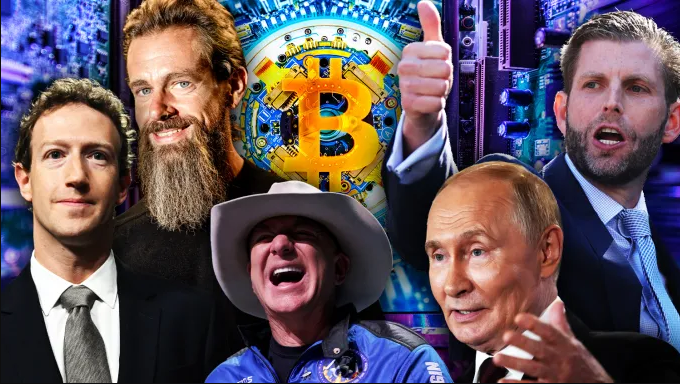
According to the original report, Doug Liman’s upcoming AI-enabled crypto movie Bitcoin is expected to include AI-enhanced versions of public figures such as Jeff Bezos, Mark Zuckerberg, Vladimir Putin, and Eric Trump. The film, previously connected to the title Killing Satoshi, has also been described as starring Casey Affleck, Pete Davidson, Gal Gadot, and Isla Fisher, with Liman directing and Nick Schenk writing the script. That is a strange sentence. It is also exactly the kind of sentence that says something about where Bitcoin is now.
But the more interesting point is not that Hollywood found Bitcoin. It is that Bitcoin is becoming too culturally useful to ignore, even when the bitcoin price looks ugly and crypto sentiment feels tired.
A weak chart does not mean a dead narrative
The crypto market has been under pressure recently. Bitcoin has struggled to hold momentum, ether has been weaker, and several analysts have trimmed near-term expectations as regulatory and macro catalysts remain uncertain. That does not make the industry “over.” It just means the market is doing what crypto markets do: punishing leverage, testing conviction, and humiliating anyone who thought the line only moves one way.
Price is the loudest signal in crypto, but it is not the only signal. When bitcoin is down, most casual observers assume interest disappears. In reality, serious attention often gets quieter rather than smaller. Companies keep building. Hardware people keep testing. Miners keep optimizing. Developers keep arguing. The tourists leave, but the infrastructure conversations continue.
That is why a movie like Bitcoin matters in a different way. It is not proof that the market is bullish tomorrow. It is proof that Bitcoin has escaped the narrow financial box. It is now a story engine for arguments about money, power, identity, technology, AI, and who gets to define truth on the internet.
Hollywood is late, but it is not stupid
Hollywood does not chase every online obsession. It chases material that has conflict. Bitcoin has plenty of it.
There is the Satoshi mystery. There are billionaires, exchanges, regulators, miners, hackers, true believers, frauds, maximalists, traders, and politicians. There is also the strange fact that an open-source monetary network with no CEO became one of the most debated financial assets on earth. Even people who hate Bitcoin understand that it creates drama.
The reported AI angle makes the project even more fitting. A Bitcoin movie made with heavy AI tools is almost too on the nose. Bitcoin asked people to rethink money without trusting a central authority. AI is asking people to rethink images, identity, labor, and authenticity. Put the two together, and you get a very 2026 kind of tension: can a system built on verification be explained by an industry now experimenting with synthetic reality?
That is why this is more than a crypto movie headline. It shows that Bitcoin is no longer just a financial topic. It has become a cultural object people use to talk about distrust.
The public figure signal is bigger than the celebrity names
The Deadline report says versions of major public figures are expected to appear as characters. Whether people love that idea or hate it, the choice is telling. Bitcoin is being framed through the faces of power.
That is not an accident. Bitcoin has always pulled powerful people into the conversation, even when they would rather ignore it. Tech founders get asked about it. Politicians get asked about it. Asset managers get asked about it. Public companies get judged for holding it or avoiding it. Even critics have to keep explaining why they still think it should not matter.
Recent public comments from figures like Eric Trump and Michael Saylor show that bullish Bitcoin messaging is still loud even during weak markets. Others treat crypto as a political tool, a treasury asset, a branding opportunity, or a threat. Those are not the same thing. Support, opportunism, and curiosity should not be mixed together. But they all point to one reality: Bitcoin has become a subject that influential people can no longer treat as a weird side quest.
That shift is easy to miss during a price drop. When candles are red, the timeline gets emotional. People act like the entire world has rejected the asset. But outside the trading screen, Bitcoin keeps showing up in bigger rooms.
Bitcoin mining is the part Hollywood usually misses
Most mainstream Bitcoin stories focus on the mystery of Satoshi, the bitcoin price, exchange scandals, or rich people getting richer. That makes sense for drama, but it misses the machine underneath.
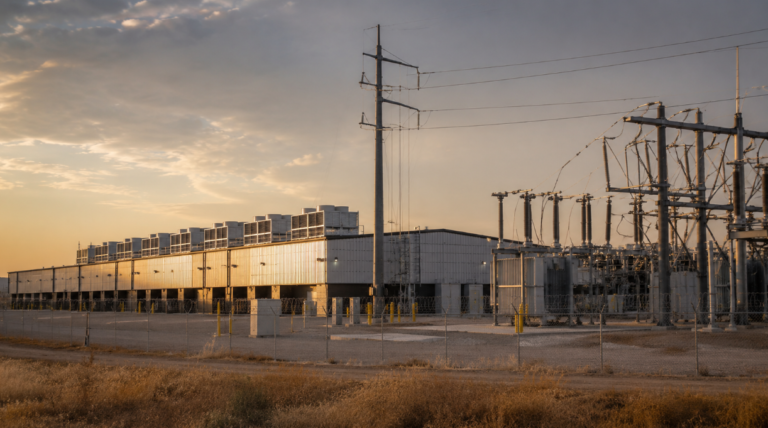
Bitcoin is not just a ticker. It is a network secured by physical infrastructure. Energy, chips, firmware, heat, fans, pools, home setups, industrial farms, repair work, and efficiency battles are all part of the story. Bitcoin mining is where the digital idea touches the real world.
This is also where the industry becomes more interesting than the movie version. Mining is not only about giant warehouses. It is also about smaller devices, open-source hardware culture, and people learning how the network works by running a Bitcoin miner at home. That is a less glamorous story, but it is closer to the original spirit of Bitcoin than most red-carpet narratives.
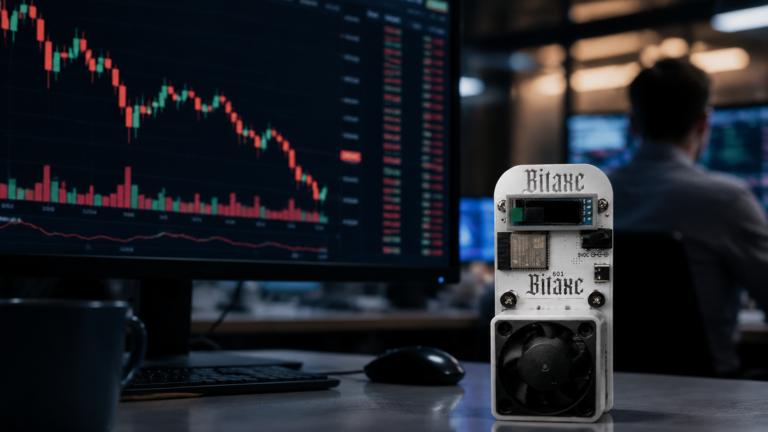
The Bitaxe miner community is a good example. It is not trying to compete with industrial-scale mining farms on raw output. It is about access, education, experimentation, and solo mining as a way to participate directly in the network. In that sense, Bitcoin mining hardware is not only a business category. It is also a learning tool.
Home mining makes Bitcoin less abstract
A lot of people understand Bitcoin only as a price chart. They watch bitcoin go up or down and decide whether the whole thing is alive or dead. Home Bitcoin mining changes that relationship.
When someone sets up a small miner, they start to see Bitcoin differently. They learn about hashrate, difficulty, power consumption, heat, pools, firmware, and probability. They learn that mining is not magic and not passive income fairy dust. It is engineering, math, and patience. Sometimes it is also frustration.
That is why Bitcoin home mining deserves more attention than it gets. It gives regular people a physical connection to a network that is usually discussed in abstract language. A compact device on a desk will not replace an industrial facility, and nobody serious should pretend otherwise. But it can make the network feel real.
Solo mining has a similar educational value. The odds are brutal for small miners, but the concept is powerful. You are not just watching Bitcoin. You are touching the mechanism. A product like SoloBitaxe fits into that broader trend as one example of how smaller Bitcoin mining hardware is making the technical side of Bitcoin easier to approach.
The market can be cold while the culture gets warmer
The mistake many people make is assuming that price, culture, and infrastructure all move together. They do not.
The bitcoin price can fall while public interest broadens. A crypto market can feel exhausted while developers still build. Mining margins can tighten while hardware experimentation improves. A Hollywood movie can look ridiculous to insiders while still proving that Bitcoin has become part of the mainstream imagination.
Doug Liman’s Bitcoin may turn out to be great, messy, controversial, or forgettable. Nobody knows yet. The use of AI-enhanced characters will probably create its own debate, and the film may say more about Hollywood’s anxiety around technology than about Bitcoin itself. But the fact that this movie exists at all is hard to ignore.
Bitcoin no longer needs everyone to like it. It only needs to keep being too important to leave out of the conversation.